

Learning to Climb Stairs
Climbing Stairs is a really important motor skill for kids to develop. This skill is used in every day life. Go up and down flights of stairs, go and down curbs, going to the stairs to the slide on the playground, and getting on and off a school So , today we are going to talk about how stair climbing develops and how to support kids as they learn this skill.
How Kids Develop Stair Climbing
As a Physical Therapist I look at stair climbing through a developmental lens. As kids grow, mature, and get stronger/more stable their ability to climb stairs grows and changes in a predictable pattern.
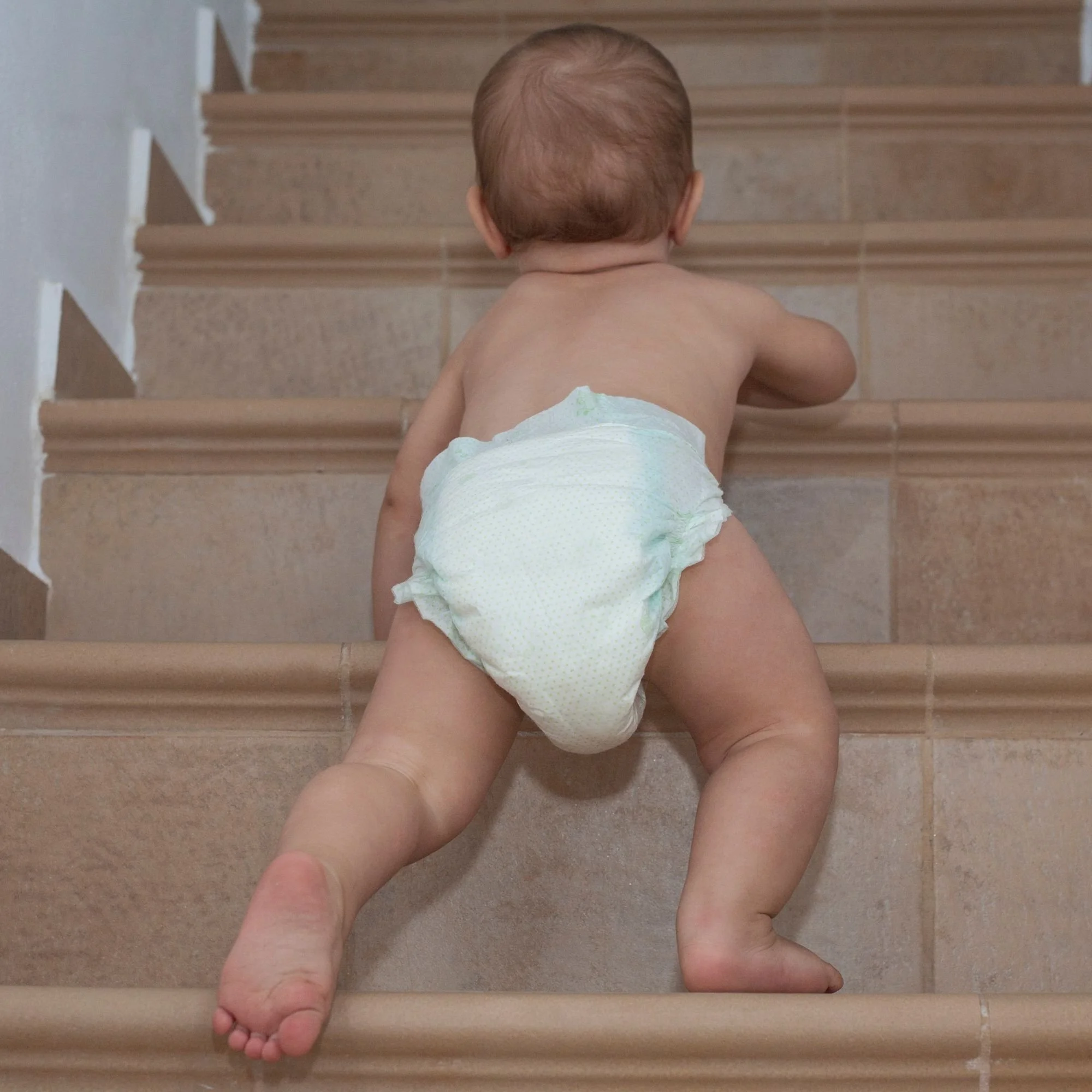
During their second year of life kids start to climb stairs by crawling up and down on hands knees.
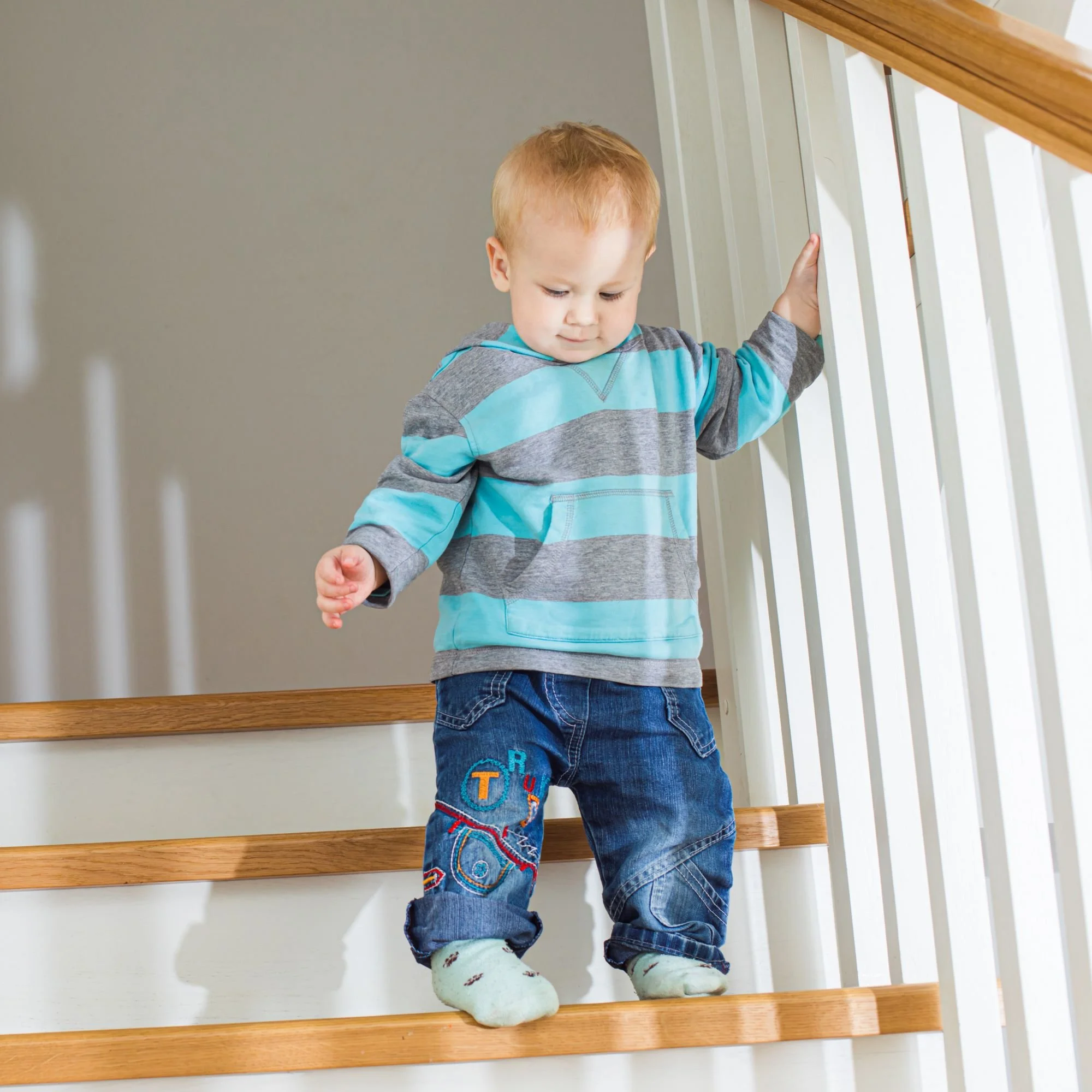
Around age 2, kids begin to take steps up and down the stairs. As your child learns to climb stairs it’s important to know that going up stair is a lot easier than going down. Descending (or going down) requires more control and stability than ascending (going up). When your child begins stepping up and down you will notice they need support from an adult, railing, or wall. They will also use somethings called a step-to or marking time pattern. This pattern is simply placing both feet on each step.
As kids practice more and more they will be able to use this marking time pattern to go up and down without a railing or support between the ages of 2-3.
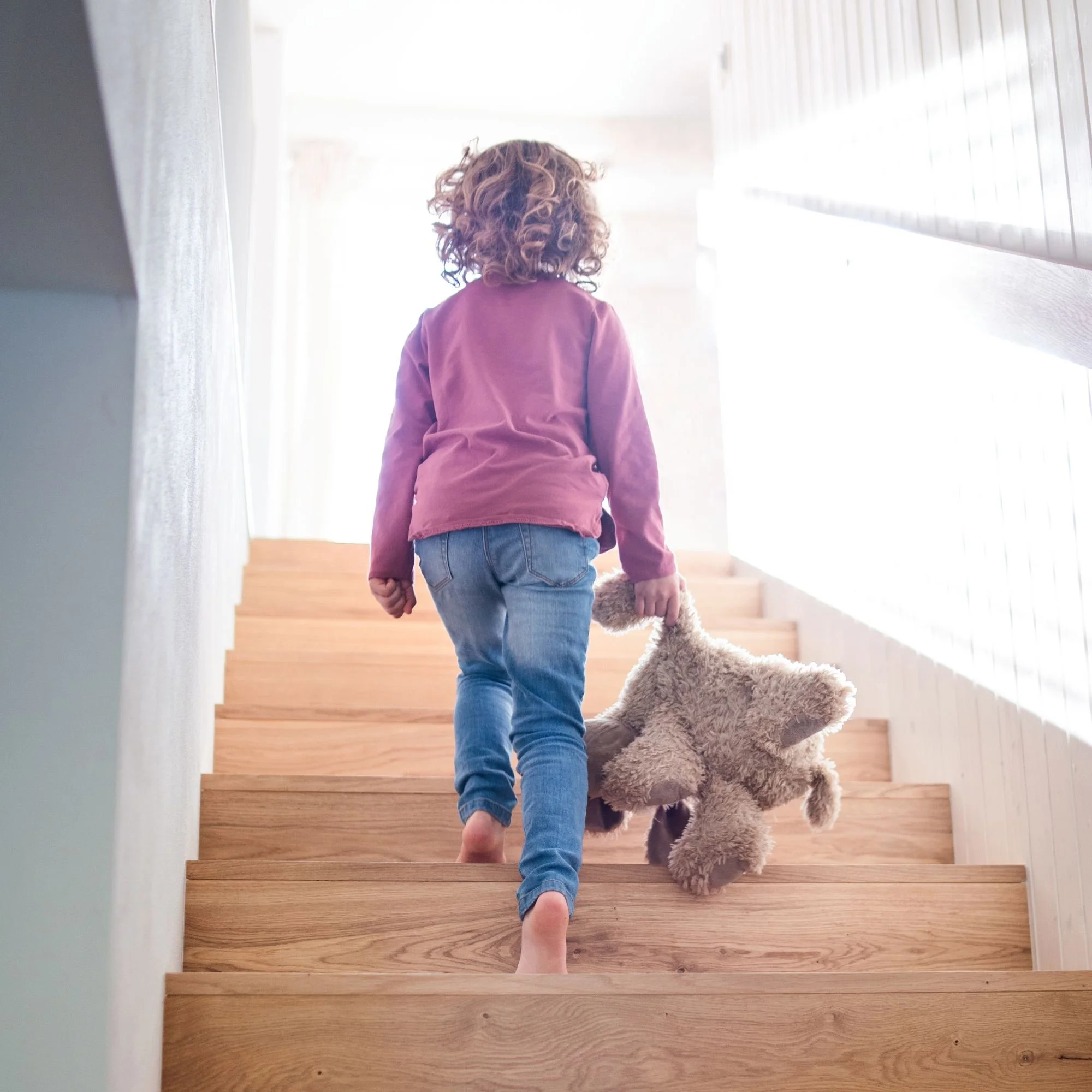
Between the ages of 3-4 they will begin to use a more mature pattern to go up and down the stairs. We call this a reciprocal pattern. This pattern involves placing one foot on each step. Just as kids learned to use the marking time pattern with support from an adult or railing/wall, they will do the same thing with this new pattern.
By the time they turn 4, kids should be able to go up and down with the mature reciprocal pattern without a railing.
How to Support Stair Climbing
If your child isn’t climbing stairs and you are having concerns, here are few things to try.
Practice: Kids learn new skills with repetition. Practice going up and down the stairs with your support. Going down can seem scary, so I often stand on the step in front of kids facing them so they are looking down at me not all the steps. If you are helping your child by holding their hand, be sure you are not pulling up on your child’s arm as this motion can cause shoulder injuries.
If your child needs a little more support, try these activities to improve the skills needed for stair climbing.
Balance on one foot like a flamingo. Believe it or not we stand on one foot during stair climbing so having more stability in this position can be really helpful. If this position is challenging try starting with 1 foot on a small stool like this one. Or, play with a Stomp Rocket. In order to make the toy take off, your child will need to stand on 1 foot to stomp.
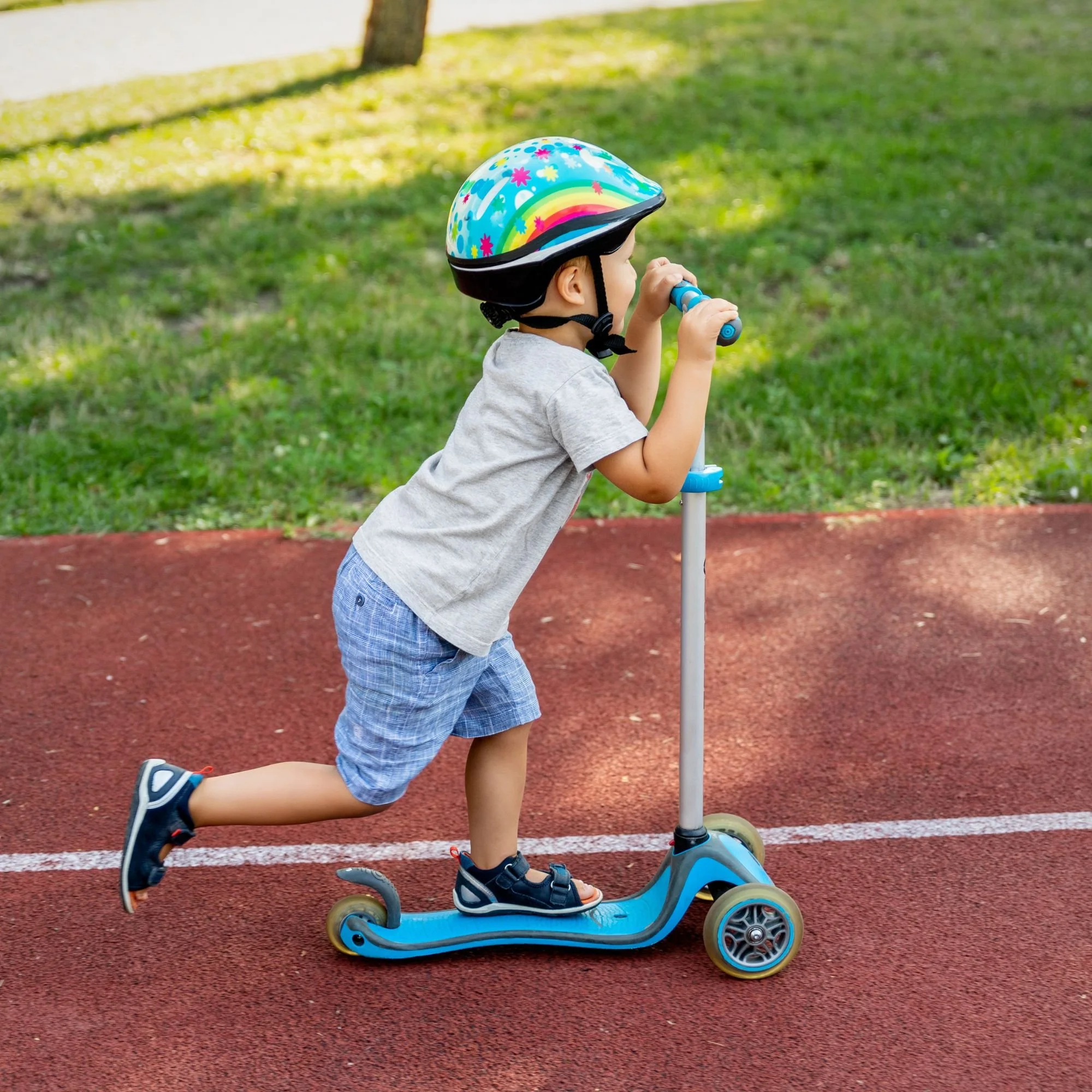
Exercises or games that focus on the posterior chain, which are the muscles in the back of the leg like the glutes and hamstring. For kids riding a scooter, riding a bike, crab walking, or bridge exercises can be helpful. When crab walking or doing bridges, try using these push cars as a motivator. Ask your child to hold the position long enough for the car to zoom under.
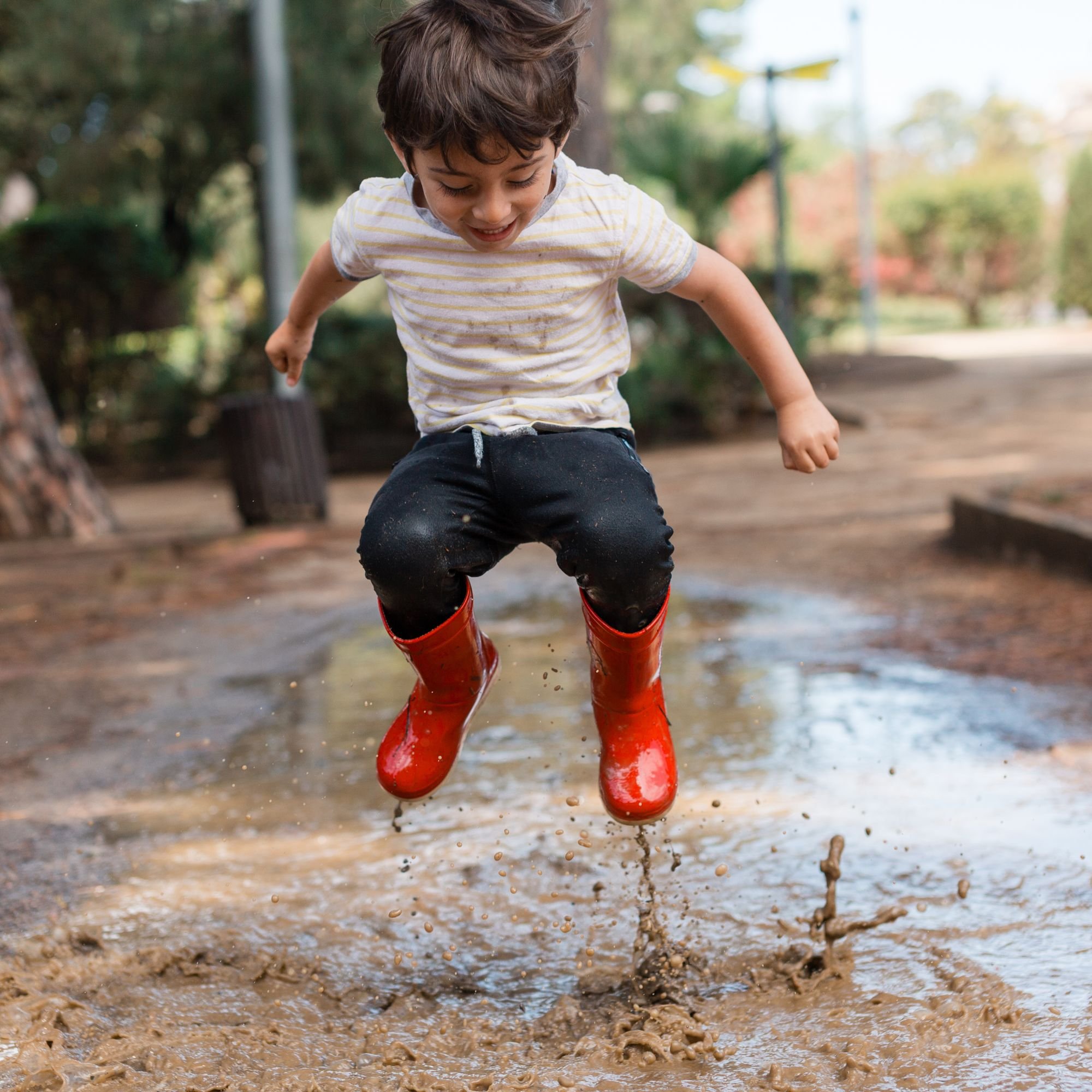
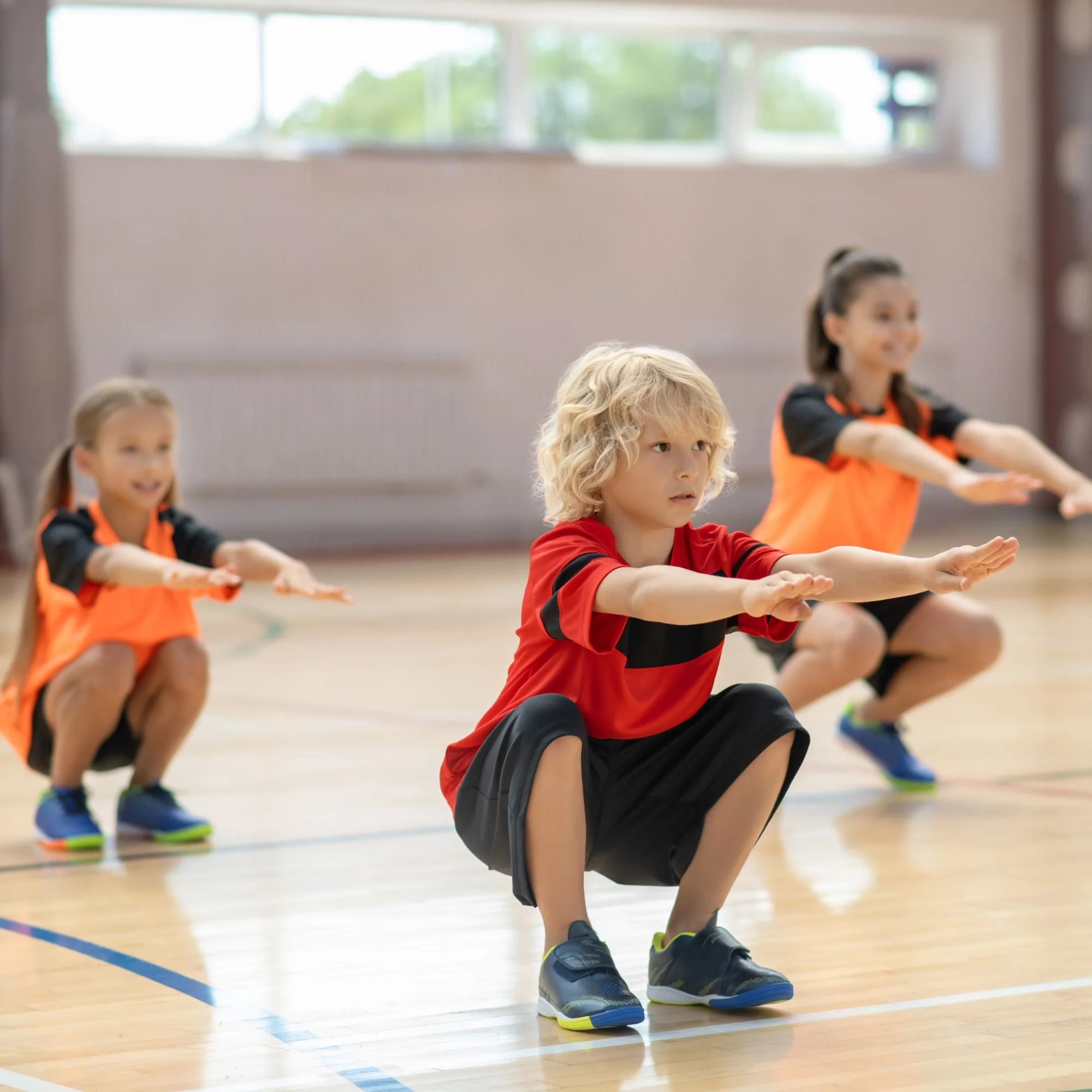
Jumping with a deep squat and then blasting off as high as possible.
Slow Motion games. Going down stairs requires control and moving your body as slow as possible is fun way to improve control. Practice picking something up from the ground as slow as possible is a good one.
The highest form of learning and skill mastery is the ability to transfer the skill to different environments. Try, practicing climbing stairs at home, a friend or family members home, the park, or even the school bus.

If your child is still struggling, be sure to reach out to your medical for additional support.
Additional Resources for Stair Climbing

Favorite Toys to Support Stair Climbing
Thank so much for stopping by today. I’m really glad you are here. If you are looking for more gross motor development content, check out this post.
See You Soon,
Dr. Heather, DPT
Dr. Heather, DPT/Pediatric Therapy Essentials, LLC participates in the Amazon Associates Program. Should you choose to use these links, this channel may earn affiliate commissions at no additional cost to you. Thanks for your support!
